A robot working in orbit faces vacuum, radiation, long communication delays, and large temperature swings. Those conditions turn a simple repair task into a full system problem, from the gripper at the end of the arm to the software on the ground.
This article looks at what in-orbit robotics must do to become useful for satellite operators, where the hard limits sit, and which proof matters before anyone signs a service contract.
Quick read
- Robotic servicing needs force control, clear camera views, and tools made for each task.
- The robot must protect the satellite while it moves, grips, cuts, or connects hardware.
- A good demo proves motion; a useful mission proves repeatable work with a real satellite.
What in-orbit robots actually do
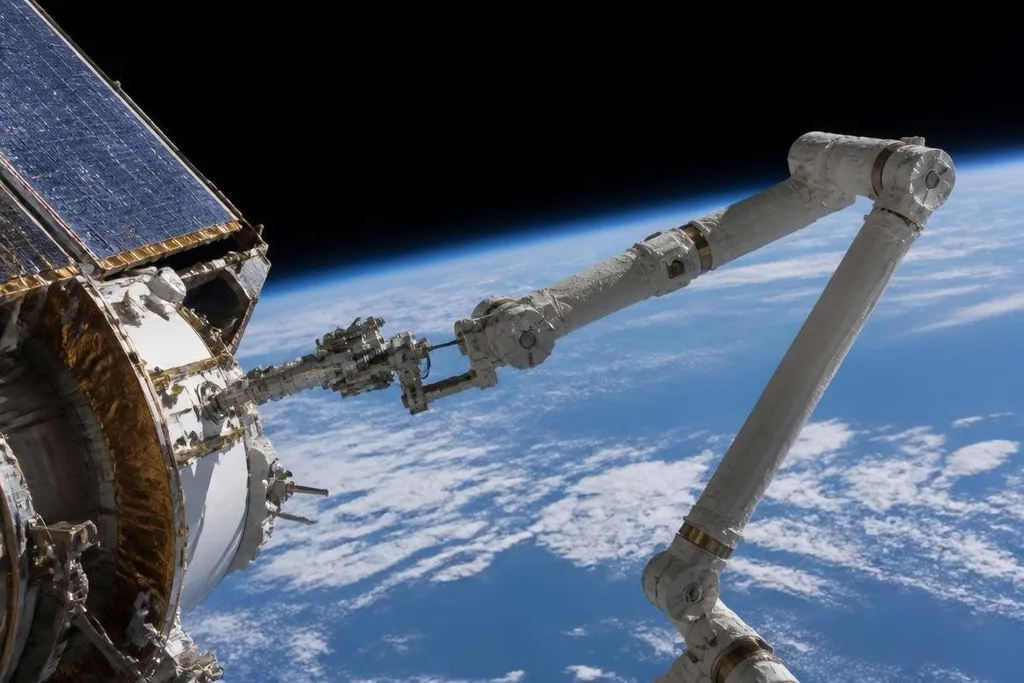
In-orbit robotics covers machines that inspect, move, repair, refuel, or assemble hardware after launch. A robotic arm may hold a camera for inspection, carry a tool to a panel, or connect with a satellite through a planned grapple point.
The arm is only one part of the system. Cameras help the operator judge distance, force sensors reveal contact, and software limits motion near fragile surfaces. Thrusters or reaction wheels control the servicing vehicle, since every push on a satellite can change its path or spin.
That last point sets space work apart from a factory floor. A technician on Earth can brace against the ground. A servicing robot cannot. If its gripper presses too hard, the satellite may rotate instead of accepting the tool.
Why the hardware is hard to trust
The first problem is contact. A tool must reach the right bolt or panel without scraping nearby parts, snagging insulation, or pushing the spacecraft away.
The robot needs a known grasp point, a clear view, and a plan for what happens if the part does not move. The second problem is control. Radio commands take time to travel, and an operator may not see every movement in real time. That places more work on onboard software, which must stop motion when sensors report a bad contact or an unexpected position.
The third problem is heat. In orbit, a component can face direct sunlight and then move into shadow. A motor, camera, or battery must work across those changes without losing the accuracy needed for a close repair.
These limits explain why a short video of an arm moving a test object proves little. The useful test includes contact, tool changes, blocked views, and recovery from a failed step. Operators need records of what the robot sensed and why it moved.
The business case depends on repeatable work
A service robot has to do more than reach a satellite. It must reduce the cost or risk of replacing that satellite, extend a mission, or make a task possible that a launch vehicle cannot handle alone.
The work may include inspection before a docking attempt, removal of a damaged cover, or movement of a payload between positions. Each job needs a matching end effector, which is the tool or gripper fitted to the arm. One gripper will not handle every valve, cable, or panel.
The proof has to follow the task. Reports on in-orbit robotics can tie a claim to a named robot and recorded test result, so you can tell a repeatable space operation from a motion shown once in a lab. That distinction matters when the next step is planning for a tool jam or lost camera view.
Operators also need a clear failure plan. If a tool jams, the robot should leave the hardware in a safe state. If a camera loses sight of the work area, the system needs a known hold position rather than a guess.
What remains unproven
Many designs can move an arm in a controlled test. Fewer have to work around a satellite with unknown wear, limited fuel, strict power limits, and no repair shop nearby. That gap matters more than a polished video.
I’d judge an in-orbit robot by its recovery steps before its reach or speed. A slow arm that can stop, report contact, and wait for a new command may be more useful than a fast arm that leaves an operator unsure what happened.
The strongest evidence will come from missions that publish the task, the tools, the operator workload, and the failure record. Until then, claims about routine robotic servicing remain plans rather than operating history.
A buyer’s check before the next mission
Use this screen when a company presents an in-orbit robotics system:
- Name the task: Can the team state the exact inspection, repair, transfer, or connection job?
- Check the contact plan: Where does the robot grip, and what happens if the part resists?
- Ask about sensing: Which cameras and force sensors guide the arm near the satellite?
- Review the stop rules: What makes the system pause when position or contact data looks wrong?
- Read the mission record: Does the evidence cover a real spacecraft task rather than a ground test?
The next useful proof is not a longer arm motion. It is a service mission that completes a defined job, records its sensor data, and leaves the satellite ready for the next one.